
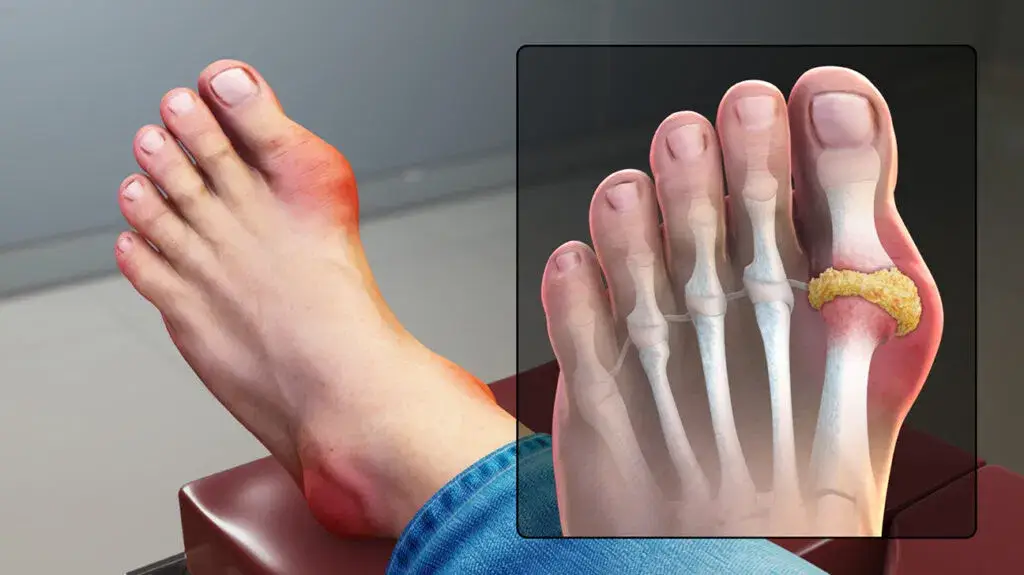
What Is Gout? (A Common Inflammatory Arthritis) Gout is one of the most common forms of inflammatory arthritis affecting adults today. According to healthcare data from the Veterans Health Administration, cases of gout continue to rise among patients receiving care in the United States. Gout is a type of arthritis caused by uric acid buildup, leading to sudden and severe joint inflammation. It typically affects the joints in the feet, especially the big toe, but can also impact ankles, knees, hands, and wrists. Gout Symptoms Gout often appears suddenly and in intense flare-ups. Common symptoms include: Severe joint pain Swelling and inflammation Reduced joint mobility Redness and warmth around the affected joint Pain that often begins at night Additional signs of gout include: Asymmetrical joint pain (often one side of the body) Sudden onset of pain (flare-ups) Pain commonly starting in the big toe Formation of tophi (uric acid crystal deposits under the skin) Fever during severe flare-ups What Causes Gout? Gout occurs when there is too much uric acid in the blood—a condition known as hyperuricemia. When uric acid levels become too high, sharp crystals form and accumulate in joints, triggering pain and inflammation. How Uric Acid Builds Up Uric acid is produced when the body breaks down purines, natural substances found in certain foods. Common causes include: Kidney dysfunction (reduced uric acid elimination) Diet high in red meat and seafood Excess alcohol consumption Genetic predisposition Certain medications (especially diuretics) How Gout Is Diagnosed Diagnosis typically begins with a consultation with a primary care doctor, who may refer you to a rheumatology specialist. A rheumatologist will: Review medical history Assess symptoms Examine affected joints for swelling or deformity Gold Standard Test The most accurate way to diagnose gout is through synovial fluid analysis. A small sample of joint fluid is extracted and examined under a microscope for uric acid crystals. Other Diagnostic Tests Include: X-rays Ultrasound imaging MRI scans Blood tests (uric acid levels) Urinalysis Kidney function tests (creatinine and urea levels) Gout Treatment Options Early diagnosis is critical in preventing long-term joint damage and deformity. The primary goals of treatment are: Reduce pain during flare-ups Lower uric acid levels Prevent future attacks Treatment approaches may include: 1. Medications Prescribed medications help: Reduce inflammation Control pain Lower uric acid levels 2. Lifestyle & Diet Changes Doctors often recommend: Reducing red meat and seafood intake Limiting alcohol consumption Staying hydrated Adopting a gout-friendly diet How to Prevent Gout Flare-Ups While genetics play a role, lifestyle changes can significantly reduce risk. Prevention strategies include: Maintaining a healthy weight Eating a low-purine diet Limiting alcohol intake Managing stress Staying physically active Important: Gout is not always preventable, and patients should avoid self-blame if they develop the condition. Why Early Treatment Matters Gout is not just “occasional joint pain.” If left untreated, it can lead to: Chronic joint damage Deformities Loss of mobility Kidney complications Early intervention helps prevent long-term complications and improves quality of life. A Historical Perspective on Gout Even great historical figures suffered from gout. The composer Johannes Brahms once famously resisted dietary restrictions prescribed by his doctor, prioritizing social dining over strict medical advice. This highlights a timeless truth: gout requires consistent management, not occasional attention. Final Thoughts Gout is a painful but manageable condition. With the right diagnosis, treatment plan, and lifestyle changes, most patients can significantly reduce flare-ups and protect their joints. The key is not to delay care. 📍 Seek Professional Gout Care If you are experiencing joint pain, swelling, or recurring flare-ups, consult a rheumatology specialist for accurate diagnosis and treatment. Piedmont Eastside Rheumatology2121 Fountain Dr, Suite EShellville, GA 30078 📞 678-694-8672🌐 https://perdraluoch.com/ ⚠️ Medical Disclaimer This article is for informational purposes only and does not replace professional medical advice. Always consult a qualified healthcare provider for diagnosis and treatment.

How Tin Man From The Wizard of Oz Helps Shed Light On Joint Issues!
Do You Feel Like the Tin Man? If you’ve ever watched The Wizard of Oz, you’ll remember the Tin Man—stiff, creaky, and barely able to move without oil. Now imagine that feeling… in your own body. If your joints feel tight, painful, or “rusty”—especially in the morning or after inactivity—you’re not alone. Millions of adults struggle daily with joint discomfort that affects their mobility, independence, and overall quality of life. The Reality of Joint Pain Joint issues are one of the top complaints among adults over 40, and they can affect nearly every part of your body: Neck and back Shoulders and elbows Wrists and hands Knees and ankles Feet For many, it’s more than just discomfort—it’s a daily limitation. One patient described it best: “It’s like having Tin Man joints… everything feels stiff, slow, and painful.” How Joint Pain Affects Your Life Joint stiffness doesn’t just affect movement—it impacts your entire lifestyle: Makes you feel older than you are Limits activities like walking, exercising, or hobbies Makes simple tasks (like climbing stairs or getting out of a chair) painful Reduces your ability to stay active and fit Disrupts sleep due to discomfort Affects relationships and intimacy Lowers overall quality of life And perhaps the hardest part?The fear that it will only get worse. What Causes “Tin Man Joints”? Joint pain and stiffness are often caused by a combination of lifestyle and biological factors: Excess weight putting pressure on joints Poor diet and inflammation Overuse or repetitive strain Aging-related wear and tear But underneath all this are three key biological drivers: 1. The Collagen Decline Collagen is the protein that keeps your cartilage strong and flexible. Cartilage acts as a cushion between your bones—but as collagen decreases with age: Cartilage weakens Cushioning reduces Bones begin to rub together Result: stiffness, pain, and reduced mobility By middle age, your body may produce less than half the collagen it once did. 2. The Enzyme Breakdown Effect When joints become inflamed or damaged, destructive enzymes like MMPs and 5-LOX increase. These enzymes: Break down collagen faster Accelerate cartilage damage Worsen inflammation In short: they speed up joint degeneration 3. The “Dry Joint” Problem Healthy joints rely on synovial fluid for lubrication. This fluid: Reduces friction Allows smooth movement Protects joint surfaces As joint health declines: Synovial fluid decreases Lubrication is reduced Movement becomes painful and stiff Just like the Tin Man needed oil…your joints need lubrication to function properly. The Good News: You Don’t Have to Live This Way Joint pain is common—but it’s not something you have to accept. With the right approach, you can: Improve mobility Reduce inflammation Relieve stiffness Get back to doing what you love What You Can Do Today Lifestyle Changes Maintain a healthy weight Eat anti-inflammatory foods Stay active with low-impact exercises (walking, swimming) Avoid overstraining joints Be Smart About Supplements Not all supplements are effective. Some contain “fairy dust” doses—too little of the active ingredient to make a difference. Always consult a qualified healthcare professional before starting any supplement. When to Seek Treatment If joint pain is: Persistent Worsening Affecting your daily life …it’s time to seek professional help. Early intervention can prevent long-term damage and restore quality of life. Take Back Control of Your Mobility You don’t have to: Struggle getting out of chairs Avoid stairs Give up activities you love Feel “old” before your time The right treatment plan can help you regain movement, comfort, and confidence. 📍 Get Expert Help Today If you’re tired of living with stiffness, pain, and limited mobility, it’s time to take action. Contact Piedmont Eastside Rheumatology to explore effective, personalized treatment options designed to relieve joint pain and restore your quality of life. ⚠️ Medical Disclaimer This content is for informational purposes only and does not substitute professional medical advice. Always consult a qualified healthcare provider or rheumatologist for diagnosis and treatment tailored to your condition.